
How to future-proof your career in the age of AI
How to future-proof your career in the age of AI
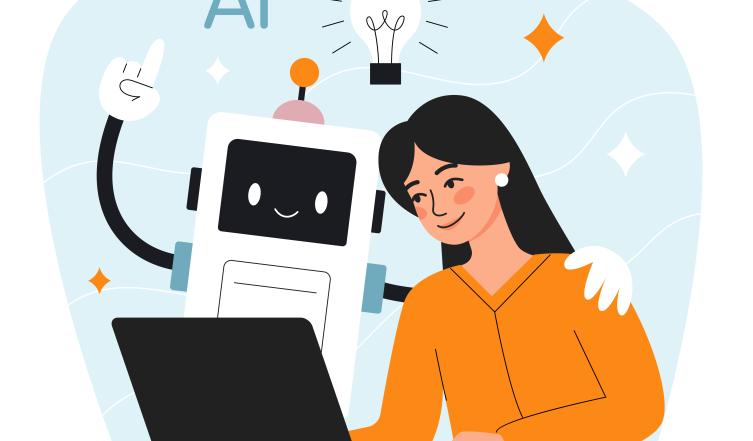
How will we create our own future in the age of AI?
The rise of artificial intelligence has sparked both excitement and anxiety. While people in every industry fear technology will replace them, others see it as an accelerator for productivity and innovation. Both things can be true.
AI is certainly already transforming how we work. From automating repetitive tasks to accelerating research and analysis, AI tools are reshaping nearly every profession.
Headlines may be asking whether AI will replace jobs. The bigger question, however, is how professionals will adapt and grow alongside new technology.
The good news is that individuals have more control than they might think. One of the most effective ways to stay relevant in an evolving job market is through upskilling—continuously building new knowledge and capabilities. The best investment you can make right now is in yourself. In the age of AI, learning new skills isn’t just helpful. It’s the most reliable way to future-proof your career.
What does it mean to future-proof your career?
Future-proofing your career means developing skills that remain valuable even as industries change.
Instead of relying only on existing expertise, professionals build capabilities that help them adapt to new technologies, new tools, and new ways of working.
These capabilities typically include:
- AI and digital literacy
- Critical thinking and problem-solving
- Communication and storytelling
- Leadership and collaboration
- Adaptability and continuous learning
While AI may automate some tasks, these human-centered skills remain difficult for machines to replicate.
Professionals who combine technical awareness with strong human skills are likely to be the most resilient in the modern workforce.
Why upskilling matters in the AI economy
Upskilling refers to learning new skills or strengthening existing ones to remain competitive in a changing workforce.
In the past, workers might have relied on a single degree or professional credential for decades. Today, careers evolve much faster. New technologies, tools, and workflows emerge regularly.
AI is accelerating that change.
Upskilling helps professionals:
- Stay current with emerging technologies
- Increase productivity using AI tools
- Improve career mobility and earning potential
- Adapt to new job roles and responsibilities
- Remain competitive in the job market
Importantly, upskilling does not mean completely changing careers.
For most professionals, it simply means enhancing the skills they already have with new tools and perspectives.
AI won’t replace humans—but it will change work
One of the most common fears surrounding AI is job displacement.
However, many experts agree that AI is more likely to transform jobs rather than eliminate them entirely.
AI systems are particularly strong at:
- Processing large amounts of data
- Identifying patterns
- Automating repetitive tasks
- Generating drafts or summaries
Humans, on the other hand, remain better at:
- Strategic thinking
- Creativity and innovation
- Ethical judgment
- Leadership and decision-making
- Building relationships
The most successful professionals will be those who learn to collaborate with AI systems rather than compete with them.
AI can handle routine tasks, while humans focus on strategy, interpretation, and creative problem-solving.
3 Practical ways to start upskilling for AI
Getting started with AI and professional development does not have to be overwhelming. Small, consistent steps can make a significant difference over time.
1. Build AI literacy
AI literacy means understanding how artificial intelligence works and how it can be applied in your field.
You don’t need to become an engineer or data scientist to benefit from AI knowledge.
Basic AI literacy includes:
- Understanding machine learning concepts
- Knowing how AI tools generate content or insights
- Recognizing the strengths and limitations of AI
- Learning ethical considerations around AI use
Short courses, workshops, and professional development programs can help build this foundational understanding.
Even a basic level of AI literacy can help professionals identify opportunities to work more efficiently and creatively.
2. Strengthen human-centered skills
As AI becomes more common in workplaces, human skills become even more important.
Communication, creativity, and leadership help professionals interpret information, guide teams, and make complex decisions.
Some of the most valuable skills to develop include:
- Communication and storytelling
- Critical thinking
- Strategic planning
- Emotional intelligence
- Collaboration and leadership
These skills enable professionals to translate insights into action, which remains a uniquely human strength.
3. Experiment with AI tools
One of the fastest ways to build confidence with AI is simply to experiment with available tools.
Professionals can start by using AI for:
- Brainstorming ideas
- Drafting content
- Summarizing research
- Automating routine tasks
- Analyzing datasets
Even setting aside 30 minutes per week to test a new tool can significantly improve familiarity and comfort with AI technology.
Over time, these small experiments can lead to major improvements in productivity and workflow efficiency.
Why continuous learning is the new career strategy
In a rapidly evolving economy, the traditional idea of “finish school and start work” is becoming outdated.
Today’s professionals increasingly adopt a mindset of lifelong learning.
Continuous learning helps individuals:
- Stay relevant as industries evolve
- Adapt to new technologies quickly
- Expand career opportunities
- Develop leadership and strategic thinking skills
Organizations also increasingly value employees who demonstrate curiosity and a commitment to learning.
Professional education programs, certifications, and workshops can help individuals build new skills without stepping away from their careers.
Programs offered through UCSC Silicon Valley Extension are designed to help professionals strengthen technical knowledge, develop leadership abilities, and gain practical experience with emerging technologies such as AI.
Upskilling is the best career insurance
Many people think of insurance as protection against uncertainty.
In today’s workforce, upskilling serves a similar purpose.
Every hour spent learning new tools or strengthening professional skills builds confidence and adaptability. The benefits may not appear immediately, but over time they compound.
Professionals who continuously invest in their knowledge are better prepared for:
- Technological change
- Industry disruptions
- New career opportunities
- Leadership roles
Ultimately, the question is not simply “Will AI change my job?”
The more important question is: “How am I preparing myself to thrive in an AI-driven world?”
Those who embrace learning, curiosity, and experimentation will be best positioned to succeed in the future of work.